Mosquito control in Western New York targets specific seasonal life cycles dictated by the regional climate. Western New York experiences active vector activity from late May through early October, driven by Lake Erie…
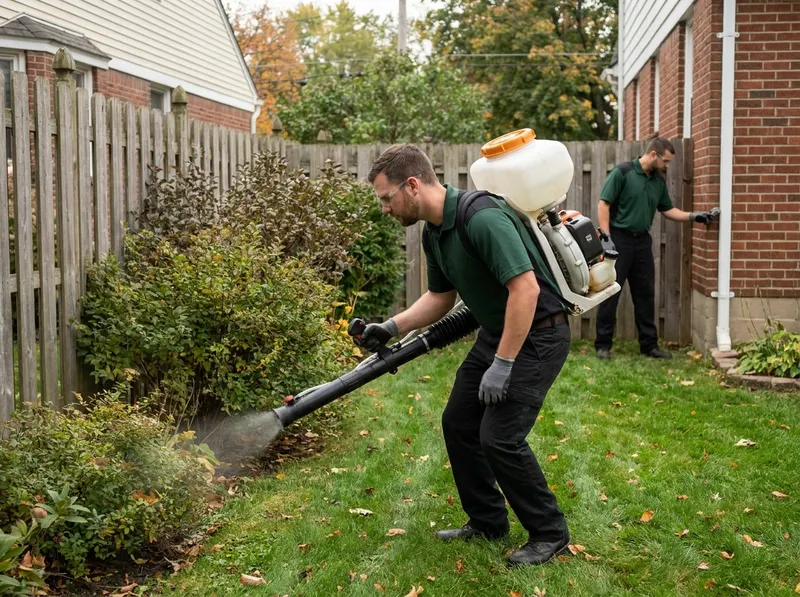
Mosquito control in Western New York targets specific seasonal life cycles dictated by the regional climate. Western New York experiences active vector activity from late May through early October, driven by Lake Erie moisture bands and heavy summer thunderstorms. In dense historic neighborhoods like Allentown, the West Side, and the Elmwood Village, closely spaced Victorian homes frequently feature shaded courtyards, aged drainage lines, and perimeter English ivy. These private enclaves create humid resting microclimates for adult *Culex* mosquitoes, the primary regional vector of West Nile virus identified in Erie County surveillance testing. Open lawn broadcast spraying is counterproductive; treatments must specifically target the biological habitat where adult females rest during peak daytime heat.
Technicians conduct a systematic, physical audit of property boundaries to identify standing water reservoirs before applying any chemical controls. In areas bordering expansive park systems, such as Parkside and North Buffalo near Delaware Park and Frank Lloyd Wright's Martin House, adult populations drift across property lines from adjacent park foliage. A targeted micro-encapsulated synthetic pyrethroid or naturally derived biological formulation is applied directly to the underside of broadleaf shrubs, dense ornamental plantings, low tree canopies up to 10 feet, and structural foundation margins. For low-lying properties in South Buffalo, the First Ward along the Buffalo River, and Black Rock, surface moisture settles along clay-rich soils. Catch basins, French drains, and unlevel grading in these zones receive BTI larvicide briquettes, neutralizing instars within 24 hours without harming birds, aquatic life, or companion animals.
Property owners deciding between retail backpack mister sprays and clinical professional barrier management face a definite trade-off: retail sprays utilize volatile, unencapsulated pyrethrins that degrade rapidly within 48 to 72 hours of UV exposure or wash away during standard Great Lakes summer storms, necessitating repeated applications. Professional-grade formulations bond to foliage wax layers, remaining biologically active for 21 to 28 days through rain cycles. Single-event barrier applications suit gatherings in areas like Larkinville or the Fruit Belt, while 21-day rotational schedules between May and September prevent overlapping generation cycles and maintain sub-threshold populations throughout the season.
Every job gets a firm, written price after a free on-site visit.
Tell us about your mosquito control job in Buffalo and we'll send a clear, written quote, usually the same day.
 Gravion Pest Control