Property owners seeking pest control services Buffalo encounter specific structural vulnerabilities caused by prolonged sub-zero temperatures, dense lake-effect snowfall, and aging architectural foundations across Erie County. Effective pest control services Buffalo residential properties require rely on physical entry sealing and micro-targeted biological treatments rather than indiscriminate chemical dispersal.
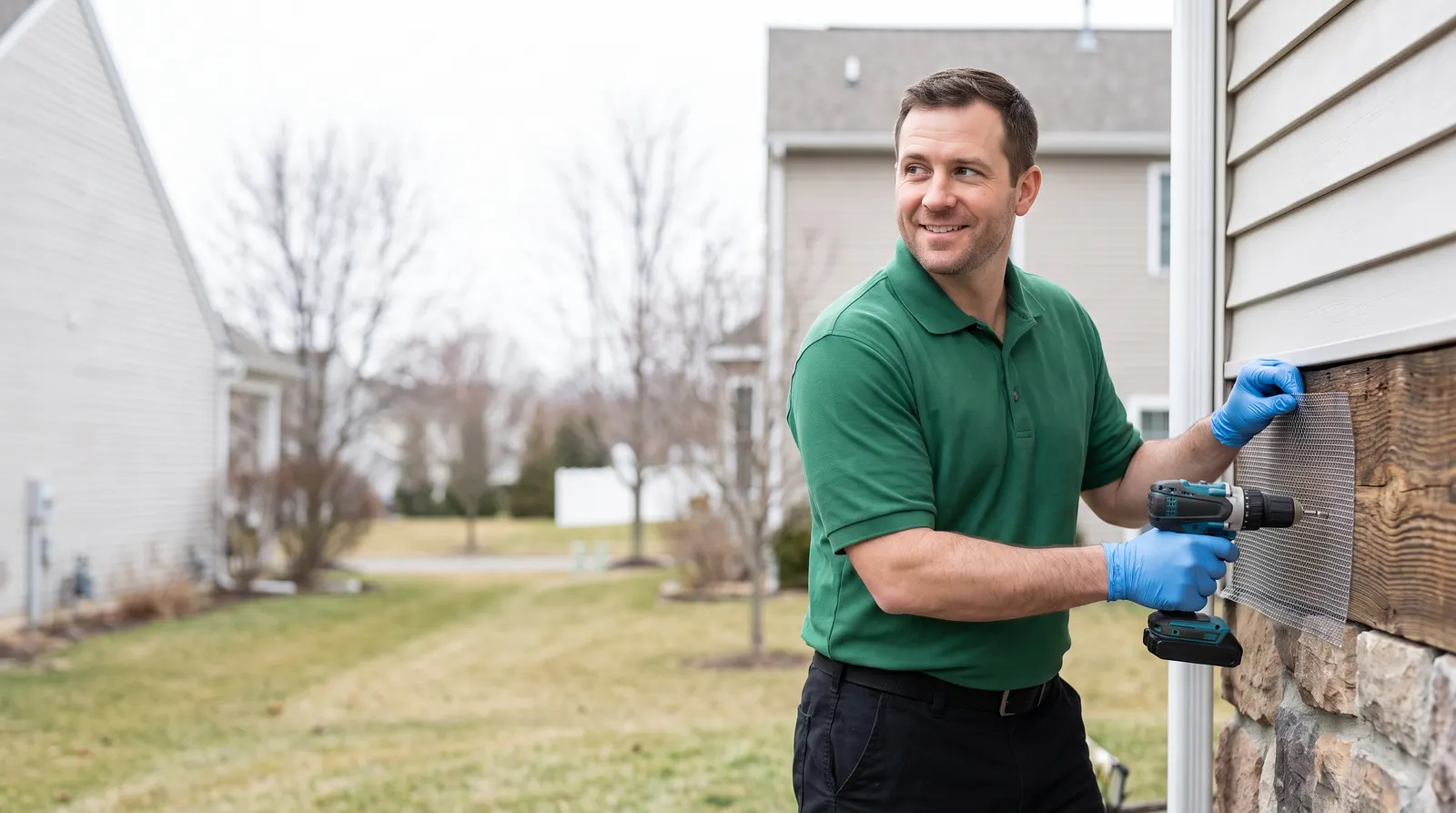
Pest control services company in Buffalo is a specialized structural remediation service that eliminates active insect or mammal infestations and seals building envelopes against regional environmental pressure.
Every service reflects the same meticulous attention to detail, whether it's a single job or a larger pest control services project across Buffalo.
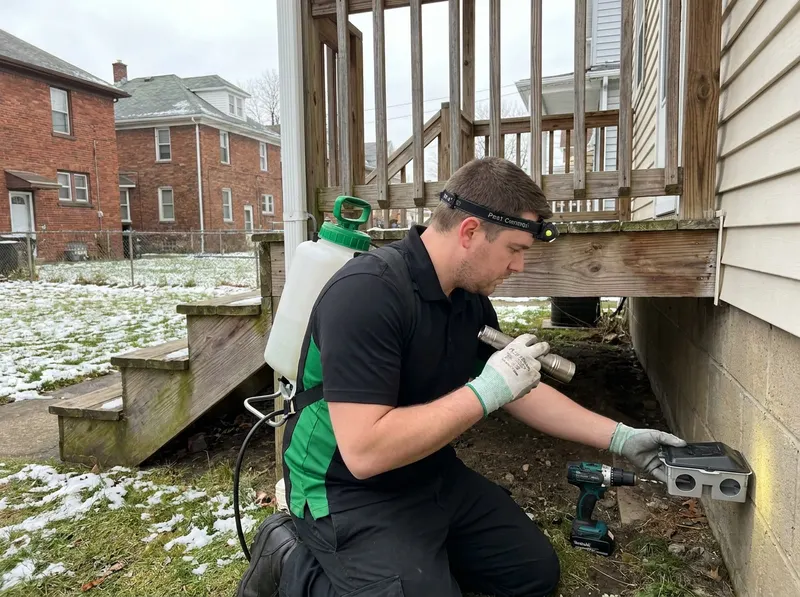
Systematic elimination and structural proofing targeting Rattus norvegicus and Peromyscus maniculatus across residential basements, crawlspaces, and foundation perimeters. Remediation establishes hard mechanical boundaries using quarter-inch galvanized hardware cloth, woven copper wire mesh, and elastomeric silicone sealants along foundation sills, masonry voids, and utility line penetrations. Interior capture programs utilize tamper-resistant mechanical snap traps placed precisely along confirmed transit runways and pheromone-marked wall edges rather than broadcast indoor rodenticides, safeguarding domestic pets and preventing hidden carcass decomposition inside enclosed wall cavities. Detailed interior audits inspect behind boiler jackets, along dropped ceilings, and across rim joists where mice establish nesting sites using shredded pipe insulation. Every service protocol tracks active feeding signs, burrow excavations, and structural rub marks to verify that the population is entirely contained before sealing perimeter thresholds.
Get a quote →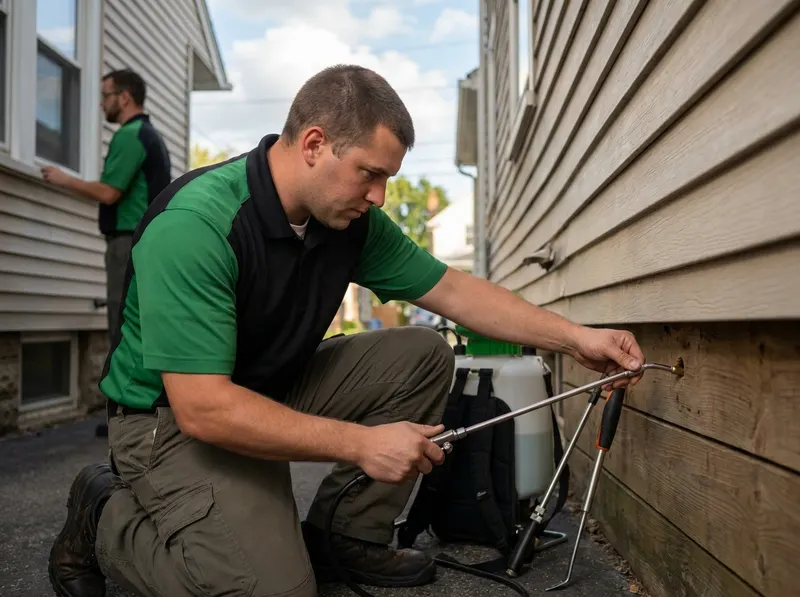
Targeted identification and eradication of Camponotus pennsylvanicus colonies nesting inside damp wall framing, window headers, roof eaves, and subflooring joists. Field diagnostics isolate parent colonies nesting outdoors in decaying trees, landscape ties, or cordwood piles from satellite nests established inside moisture-compromised structural timbers within the residential building. Technicians apply non-repellent transfer chemistry and targeted micro-injections directly into localized galleries, eliminating reproductive queens through natural social grooming without requiring broad-spectrum surface sprays across active living quarters. Technicians track coarse wood shavings and moisture trails using acoustic probes and non-invasive thermal sensors to map internal structural voids. Comprehensive remediation includes recommendations for eliminating structural wood-to-ground contact, rectifying chronic gutter overflow issues, and pruning overhanging tree canopies that create aerial bridges directly to upper roof structures.
Get a quote →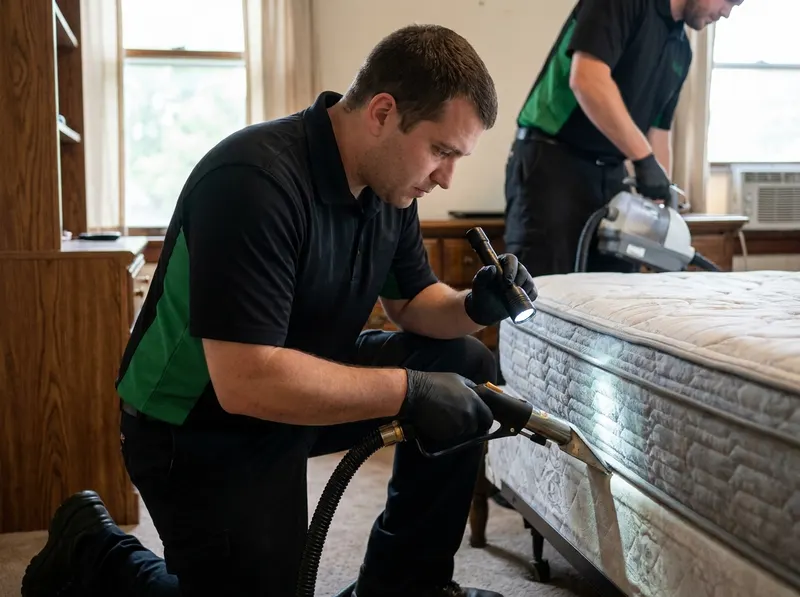
Comprehensive remediation targeting Cimex lectularius populations hidden within mattress seams, baseboard channels, electrical switch boxes, and deep wall voids. Protocols combine high-temperature thermal remediation exceeding 122 degrees Fahrenheit with focused residual desiccant dust applications inside wall harborages to eliminate eggs, nymphs, and reproductive adults in a single coordinated intervention. Clear preparation instructions, objective post-treatment inspection metrics, and complete boundary isolation ensure thorough eradication in single-family dwellings, apartment complexes, and student rental units. Technicians deploy mattress encasements, monitor traps, and apply micro-crystalline amorphous silica dust beneath baseboard margins to maintain prolonged insecticidal barriers that persist long after the primary heating cycle concludes. Follow-up visual inspections scheduled 14 to 21 days post-service verify zero nymph emergence across all monitored rooms.
Get a quote →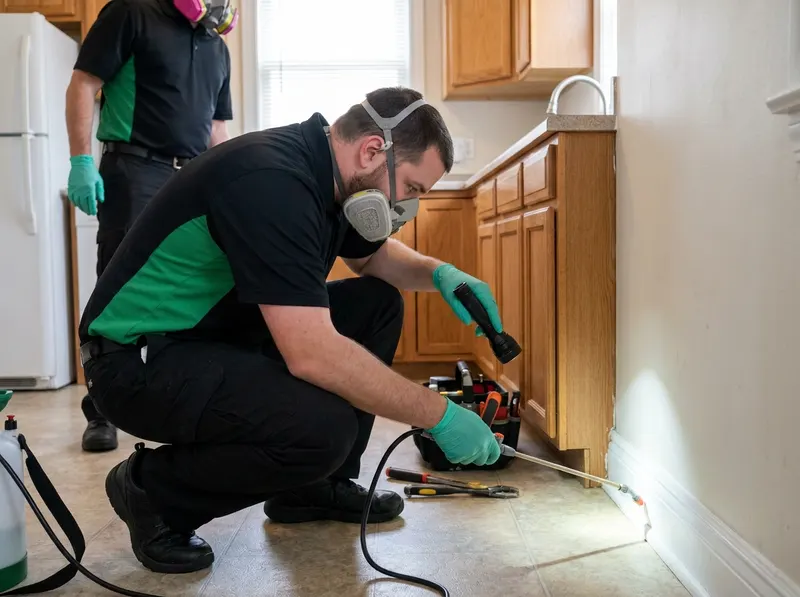
Intensive eradication programs designed for Blattella germanica and Periplaneta americana infesting commercial kitchens, residential food-preparation areas, plumbing chases, and warm motor housings. Interventions implement insect growth regulators (IGRs) that disrupt molting and reproductive maturation, paired with high-palatability bait matrices containing advanced active ingredients placed inside micro-cracks and structural crevices. Void injection techniques disperse pressurized insecticidal formulations behind kitchen backsplashes, hollow table legs, and under sink cabinet bases where nymphs aggregate. Moisture remediation guidance, trash management protocols, and void sealing prevent ongoing population recruitment through connected municipal sewer lines or shared utility risers in attached urban properties. Follow-up service cycles monitor sticky trap catch rates to verify consistent downward population trends toward total structural elimination.
Get a quote →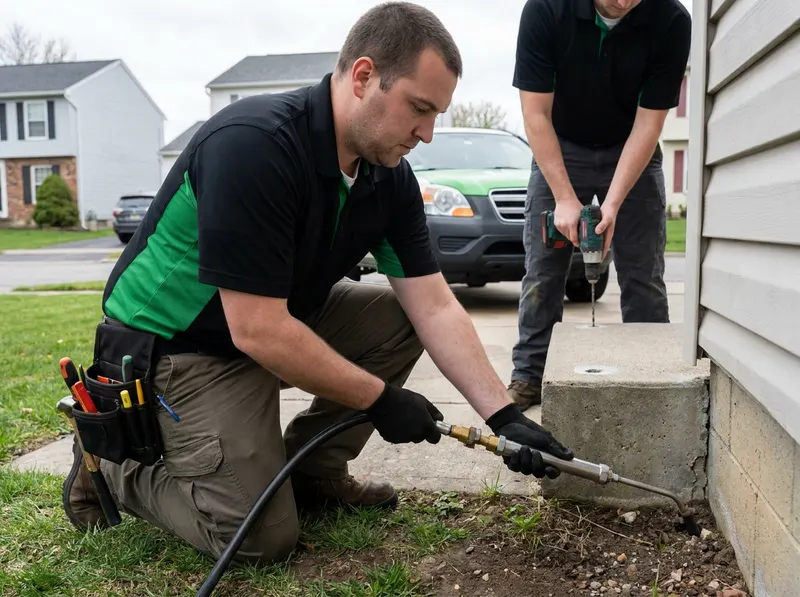
Subterranean termite defense defending structural lumber against Reticulitermes flavipes utilizing continuous exterior liquid barrier applications and non-invasive monitoring stations installed around foundation perimeters. Technicians survey subterranean mud tubes running along stone foundations, basement support piers, and exterior grade transitions. Remediation establishes an uninterrupted non-repellent soil barrier around the building envelope, intercepting foraging workers and eliminating the subterranean reproductive colony through social grooming transfer. Specialized pressure-injection equipment delivers non-repellent termiticide deep into the soil alongside foundation footings and through expansion joints in attached garage slabs. Technicians map structural damage across sill plates, floor joists, and stud bases, confirming that wood moisture contents remain below the threshold required to support subterranean activity.
Get a quote →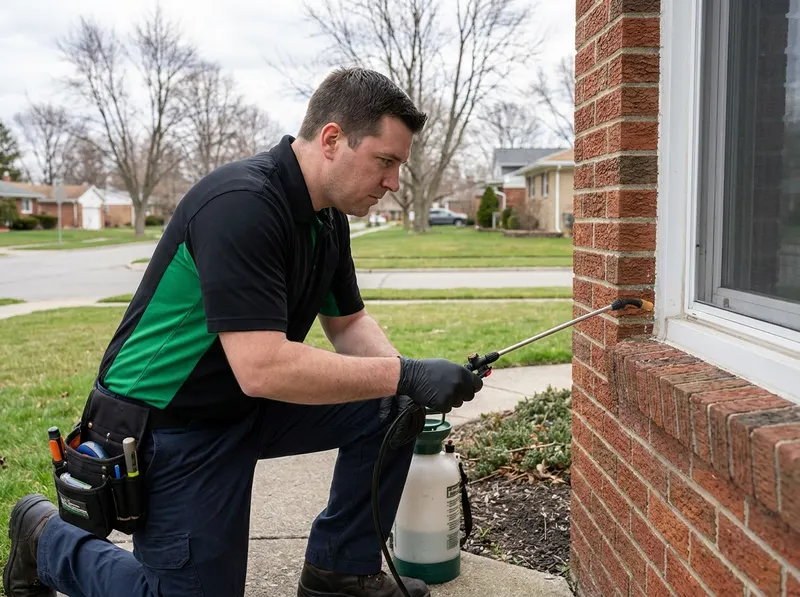
Integrated population reduction managing common house spiders, cellar spiders, and yellow sac spiders inhabiting eaves, window framing, unconditioned basements, and attached garages. Field protocols focus on physical de-webbing of exterior overhangs, applying micro-encapsulated perimeter barriers to prevent arachnid transit across foundation perimeters, and managing exterior lighting attraction zones that concentrate flying prey insects. Controlling indoor humidity levels using mechanical dehumidification guidance and eliminating secondary insect food sources creates an inhospitable indoor habitat, preventing seasonal indoor web construction. Technicians treat unconditioned crawlspaces, crawlspace vents, and attic rafter junctions with electrostatically charged dusts that penetrate narrow architectural joints. Long-term defense plans focus on sealing gaps around exterior siding corners, window screens, and doorway weather stripping.
Get a quote →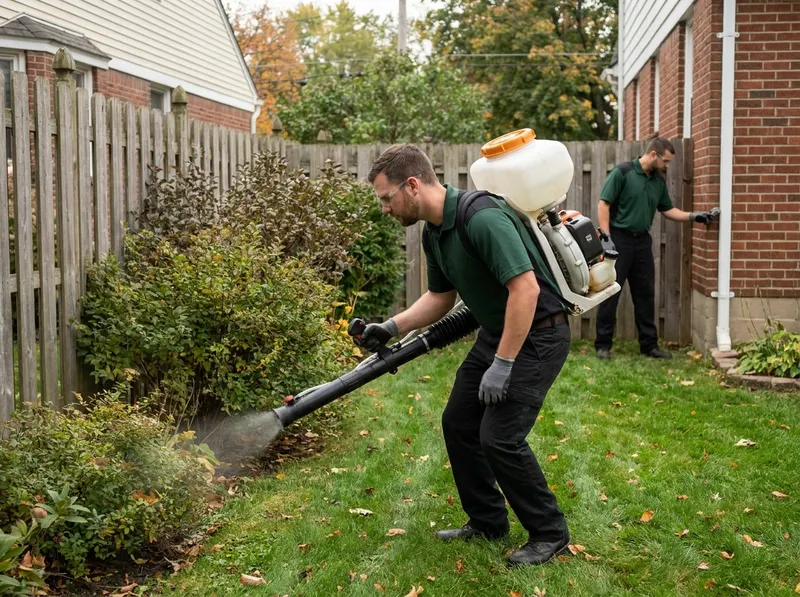
Targeted exterior vegetation management and source reduction suppressing larval and adult Culicidae species across residential lawns, shaded borders, and patio spaces. Technicians treat the undersides of dense foliage, shaded ornamental shrubs, and structural overhangs using micro-encapsulated adulticides that resist wash-off during heavy summer precipitation events. Biological larvicides containing Bacillus thuringiensis israelensis are placed directly into standing water basins, catch basins, drainage swales, and decorative water features to stop juvenile mosquito breeding cycles without harming aquatic wildlife. Properties receive an intensive topographic inspection that pinpoints poor drainage areas, clogged roof gutters, low-lying lawn hollows, and unmaintained birdbaths. Monthly continuous applications throughout the active flight window from May through September reduce adult biting pressure across backyards and outdoor seating zones.
Get a quote →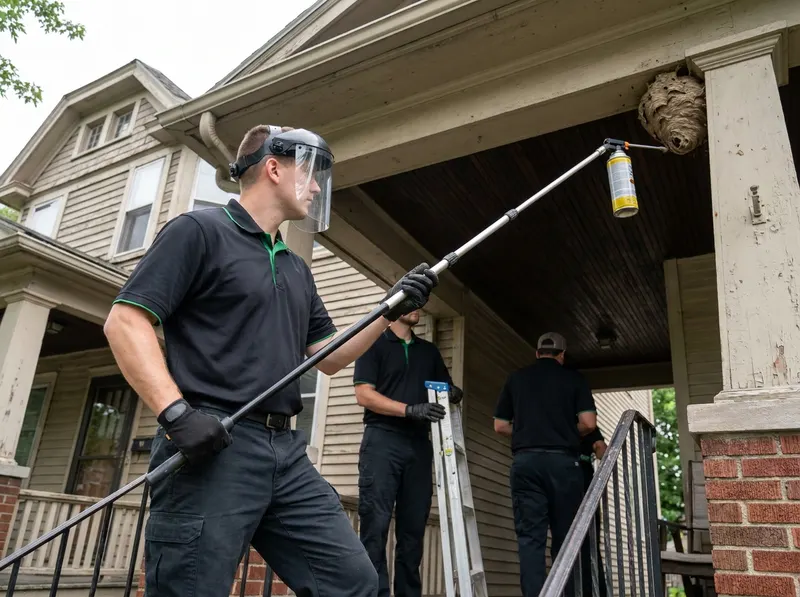
Definitive physical extraction and aerial nest treatments targeting Vespula yellowjackets, Dolichovespula bald-faced hornets, and Polistes paper wasps nesting under roof soffits, porch ceilings, structural attic vents, and exterior wall siding. Technicians operate with specialized protective suits and pressurized delivery lances to neutralize aggressive colonies rapidly with minimal disruption to building occupants. Structural access voids are sealed following complete physical comb removal to prevent secondary infestations by carpet beetles or honey and wax-melt damage behind exterior cladding. Ground-nesting yellowjacket burrows in garden beds, retaining walls, and turf borders are treated with localized void applications that extinguish underground chambers. Technicians confirm total nest neutrality before executing structural patch work on wall facades or roof fascias.
Get a quote →You get a firm, itemized quote for your pest control services before any work begins, no surprises, no pressure.
Careful prep, tidy work, and a full cleanup when we are done. We treat your home and belongings like our own.
The same trusted, background-checked team from the first call to the final check.
Selecting appropriate intervention protocols depends on the pest biology, structural construction type, and seasonal vectors present on the property. If structural framing exhibits moisture damage or frass deposits from wood-destroying insects, select species-specific carpenter ant or subterranean termite remediation; if persistent movement occurs within exterior cavities or dropped ceilings during early winter freeze-thaw cycles, select mechanical rodent exclusion with heavy-gauge galvanized mesh. The functional trade-off involves upfront investment: continuous perimeter applications provide rapid localized knockdown but require ongoing seasonal replenishment, whereas permanent physical barrier exclusion costs more during initial installation but definitively prevents multi-generational rodent re-entry through deteriorating building envelopes.
For high-density multi-family properties or university housing near South Campus, broad residual crack-and-crevice treatments deliver immediate population knockdowns, whereas historic timber-frame structures in Allentown or the Elmwood Village require meticulous micro-injection to protect interior finishes from unnecessary chemical saturation. When addressing recurring seasonal insect activity, quarterly barrier applications establish preventative soil bands that reduce insect pressure by over 80 percent, but standalone seasonal perimeter treatments do not resolve deep internal wall-void colonies established during prior seasons. Property managers balancing tenant turnover against operational budgets frequently select targeted gel and insect growth regulator bait matrices for German cockroaches because baiting preserves occupant air quality without mandating complete 24-hour unit evacuations, whereas extensive thermal remediation requires total unit vacatur and extensive tenant preparation while offering single-day population eradication.
Homeowners facing wildlife intrusion must choose between lethal trapping and humane exclusion; installation of positive one-way exit doors combined with steel roof-vent flashing requires higher technical labor than temporary exterior bait boxes, but mechanical exclusion permanently stops raccoons and squirrels from chewing through rotted fascia boards or nesting within attic cellulose insulation. For questions regarding specific structural evaluations or custom treatment plans, call (716) 503-3109.
Every project gets a firm, written price after a free on-site visit. Ranges below for orientation.
Tell us about your pest control services job and we'll send a clear, written quote, usually the same day. Or just call and talk to a real Buffalo pro.
(716) 503-3109
Properties across older Buffalo communities, such as the turn-of-the-century balloon-framed homes surrounding Delaware Park, Parkside, and the Elmwood Village, face heightened rodent and insect intrusion due to century-old stone mortar degradation and extensive freeze-thaw cycles. Lake-effect precipitation and moisture retention near water corridors like Canalside exacerbate timber dampness, creating ideal nesting environments for black carpenter ants along rooflines and porch footings. Effective remediation in neighborhoods from South Buffalo to Black Rock requires understanding local building techniques, including sandstone block foundations, unvented crawl spaces, and historical brick party walls. In areas like Allentown, dense rows of Victorian wood-frame properties share tight property lines, allowing foraging rodents to migrate along exterior fence lines, underground telephone pathways, and rear alley networks. Structural settling in North Buffalo brick colonials creates hairline gaps along limestone window ledges and exterior cellar hatchways, permitting Peromyscus deer mice and Norway rats to access warmth when lake-effect snow squalls arrive off Lake Erie. In the Fruit Belt and West Side, historical stone basements frequently display lime mortar washout, which permits subterranean moisture pooling that supports large populations of cellar spiders, camel crickets, and silverfish. Neighborhoods bordering historic industrial corridors such as Larkinville and the First Ward experience distinct pest pressures tied to ongoing civil infrastructure improvements, railway easements, and vacant industrial footprints where subterranean rat burrows are disturbed, causing rodents to seek shelter in adjacent residential cellars. Structural remediation across Buffalo properties must therefore account for local masonry practices, deep seasonal frost lines exceeding 42 inches, and balloon-frame timber voids that serve as vertical pest superhighways from basement floorboards to third-story attics. For property audits anywhere in Erie County, call (716) 503-3109.
Free estimates for Buffalo & the surrounding area.
 Gravion Pest Control